
In many workplaces, the biggest issues are not always the loudest ones.
They are often found in the tension nobody names. In the uncomfortable silence after a comment in a meeting. In the polite smile that covers frustration. In the team member who keeps saying, “No worries,” while quietly carrying more than they should. In the leader who knows a conversation needs to happen, but keeps delaying it because they do not want to damage rapport, upset the mood, or create discomfort.
On the surface, everything can look fine.
People appear professional. Meetings continue. Tasks are completed. Everyone remains courteous and amicable. Yet underneath that calm exterior, something else can be happening. Trust can begin to thin. Frustration can start to build. Standards can slip. Resentment can quietly grow. The strongest people in the team can become tired of carrying what is left unspoken, while others may feel confused, unsupported, or unclear about what is really expected.
This is often how workplace culture starts to suffer — not always through open conflict, but through avoided conflict.
A team member is underdelivering, but nobody addresses it clearly. A leader notices tension between colleagues, but chooses to hope it will work itself out. Someone feels overlooked, unsupported, or dismissed, but says nothing because they do not want to seem difficult. Another person keeps overstepping, and the rest of the team adapts around it rather than addressing it directly.
These moments may seem small on their own, but over time they come at a cost.
Deadlines can be missed because expectations were never clarified. Team morale can drop because people feel unseen or unheard. Side conversations can replace honest conversations. Emotional energy can be spent managing tension instead of creating momentum. Instead of a healthy, open team culture, people can begin protecting themselves, holding back, or saying only what feels safe.
And then there is another common problem in workplaces: the conversation does happen, but only at surface level.
This can be just as costly.
Sometimes a leader or team member does raise the issue, but only halfway. They mention the symptom but avoid the core problem. They soften the message so much that it loses clarity. They skim over the impact because they want to stay pleasant and keep the peace. They say enough to feel they have addressed it, but not enough to bring genuine resolution.
It can sound constructive in the moment, but often very little changes.
The issue remains. The pattern continues. Frustration lingers. The team leaves the conversation without true clarity, without clear ownership, and without the healthy conflict needed to bring growth.
This is one of the hidden dangers in many organisations. It is not only the critical conversation that never happens. It is also the one that happens so superficially that it leaves the real issue untouched.
Healthy teams are not built by avoiding these moments. Nor are they built by having difficult conversations badly. They are built when leaders and team members learn how to engage in important conversations with honesty, emotional intelligence, respect, and practical skill.
That is why critical conversations matter so much in the workplace.
When handled well, these conversations can strengthen trust rather than damage it. They can create clarity instead of confusion. They can lift accountability, deepen understanding, and improve team cohesion. They can help people feel respected while still addressing what needs to change. They can move a workplace from silent tension and guarded communication to openness, courage, and genuine progress.
But having these conversations well does not happen by accident.
Many people have never been shown how to do it. They may know a conversation is needed, but they do not know how to start it. They may fear sounding harsh, emotional, awkward, or confrontational. They may struggle to balance honesty with empathy. They may want to speak up, but not know how to do so without escalating the situation or damaging the relationship.
This is where practical training makes a powerful difference.
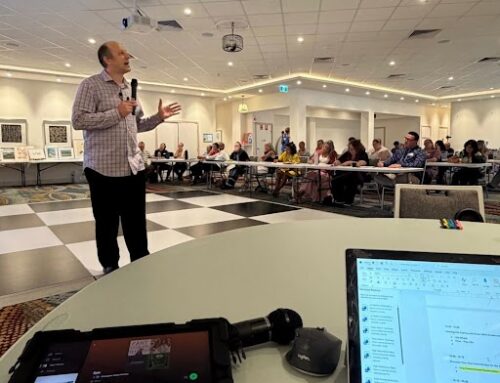
Breakthrough Corporate Training’s CRITICAL Conversations in the Workplace training is designed to help leaders and teams move beyond avoidance, beyond surface-level dialogue, and beyond the fear that so often surrounds workplace tension.
The training helps participants understand why critical conversations matter, what gets in the way, and how to approach these moments with greater confidence and skill. More importantly, it gives people the opportunity to learn and practise real communication strategies that can be used in everyday workplace situations.
Rather than staying in theory alone, the training focuses on helping people build practical capability. Participants explore ways to communicate with clarity and care, how to navigate tension without shutting down or becoming reactive, how to address issues directly while maintaining respect, and how to create the kind of healthy conflict that leads to stronger relationships and better outcomes.
This is where breakthrough begins.
Not when a team becomes perfect. Not when conflict disappears. But when people gain the courage and communication tools to stop avoiding what matters and start handling it well.
A workplace that learns to do this becomes stronger. Conversations become clearer. Expectations become healthier. Relationships become more genuine. Leaders grow in confidence. Team members develop trust in one another. People stop walking on eggshells, and the culture begins to shift from quiet frustration to meaningful dialogue.
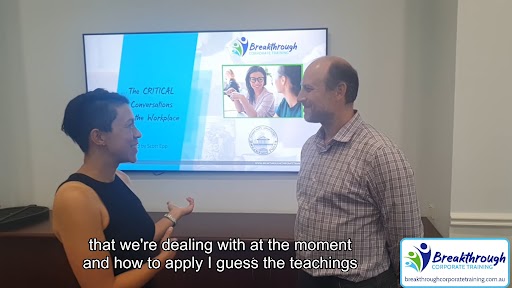
That kind of change is not hypothetical. It is the kind of experience Kim, General Manager at Breakfastpoint Community Association, expressed after Breakthrough Corporate Training delivered this training with their key leaders.
Because at the end of the day, the cost of avoiding critical conversations is rarely small. It affects people, performance, trust, culture, and the overall health of the team.
And the cost of only touching the surface can be just as great. When teams keep choosing comfort over courage, issues rarely disappear. They usually deepen.
But when teams learn how to step into the right conversations with wisdom, clarity, and practical skill, everything can begin to change.
That is the heart behind Breakthrough Corporate Training’s CRITICAL Conversations in the Workplace course: helping teams and leaders build the confidence, communication strategies, and real-world skills needed to have the conversations that matter most.
If your team would benefit from stronger, healthier, and more effective workplace conversations, send Breakthrough Corporate Training a PM and let’s have a chat.
#CriticalConversations #WorkplaceCommunication #LeadershipDevelopment #TeamCulture #HealthyConflict #PsychologicalSafety #DifficultConversations #CommunicationSkills #PeopleLeadership #WorkplaceCulture #breakthroughcorporatetraining #corporatetraining #leadershiptraining #communicationtraining