
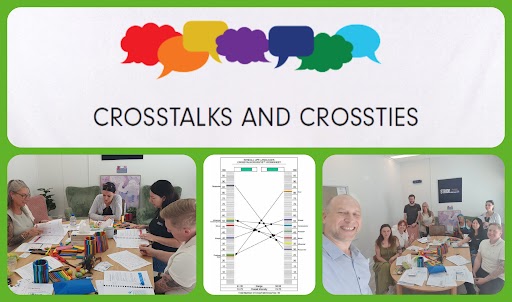
 One of the biggest myths in workplace communication is this: if people are capable, professional, and well-intentioned, communication should naturally flow.
But in real teams, that is rarely the case.
Many communication challenges at work are not caused by poor attitude or lack of effort. More often, they happen because people are communicating through very different filters, with very different instincts, expectations, and priorities.
One person wants directness and speed.
Another wants warmth and connection.
One wants detail and context.
Another wants the overview and the next step.
One processes externally.
Another needs time to think before responding.
None of these approaches are wrong. But when team members do not understand these differences, they can begin to misread each other very quickly.
What feels clear to one person may feel abrupt to another.
What feels efficient to one person may feel dismissive to another.
What feels careful to one person may feel vague to another.
That is often where communication friction begins.
The Real Cause of Team Communication Problems
A lot of team communication problems happen because people assume others interpret conversations the same way they do.
They assume everyone values the same tone, pace, level of detail, and approach to feedback.
But healthy teams are made up of different kinds of people.
Some are fast-paced and decisive.
Some are reflective and relational.
Some want accuracy and detail.
Some want ideas, momentum, and movement.
Some value harmony.
Others value candour.
These differences can be a huge strength in a workplace team. They bring balance, broaden perspective, and help teams avoid blind spots.
The difficulty comes when those differences are not understood.
Instead of being seen as complementary, they can be experienced as frustrating. Team members may begin personalising behaviour that is actually style-based. Assumptions get made. Intentions get misread. Tension builds unnecessarily.
This is why communication training matters so much in organisations. It helps teams understand what is really happening underneath the surface.
How Communication Styles Affect Workplace Teams
Communication styles influence nearly every part of team culture.
They affect how people contribute in meetings.
How they respond to change.
How they give and receive feedback.
How they handle pressure.
How they communicate in conflict.
How they build trust.
This means that when communication styles clash, the impact can show up in very practical ways across a team.
You may see it in meetings where some people dominate while others withdraw.
You may see it in emails where tone is misinterpreted.
You may see it in project conversations where people walk away with completely different understandings.
You may see it in performance discussions that are meant to help, but land poorly.
You may see it in tension between colleagues who are both trying hard, but speaking in very different ways.
Without a framework to understand these differences, teams often default to judgement.
But once people understand communication styles more clearly, they begin to replace judgement with curiosity.
That shift is powerful.
Why Self-Awareness and Team Awareness Both Matter
Self-awareness is an important part of improving communication.
It helps people recognise how they naturally communicate, what helps them feel heard, and what tends to frustrate them.
But strong workplace communication does not stop at self-awareness.
It grows when self-awareness becomes team awareness.
That is when people begin to understand not only themselves, but also the needs, preferences, and communication habits of those around them.
This changes the way people lead.
It changes the way colleagues collaborate.
It changes the way teams navigate disagreement.
It changes the way feedback is delivered and received.
Instead of asking, “Why are they like that?” people begin asking, “How can I communicate with them more effectively?”
That question creates healthier, more respectful workplace relationships.
How Life Languages Helps Improve Team Communication
One of the reasons the Life Languages framework is so powerful is that it gives teams practical insight into how and why communication can become crossed.
It helps people identify where misunderstandings are likely to happen, where differences are likely to create friction, and what each person needs in order to communicate more effectively.
This kind of learning helps teams understand that not all communication challenges are personal. Many are simply the result of people having different communication preferences and priorities.
When teams work through this together, they often uncover important insights such as:
- what helps each person feel heard and respected
- where communication gaps are most likely to happen
- what misunderstandings tend to repeat
- what each person finds energising or frustrating in conversation
- what others need to know in order to work with them more effectively
These conversations can be incredibly valuable because they move teams from assumption to understanding.
The Benefits of Understanding Different Communication Styles at Work
When people learn how to understand and adapt to different communication styles, the benefits can be seen right across the workplace.
Teams become less reactive.
People take things less personally.
Managers communicate more effectively with different team members.
Feedback becomes more constructive.
Conflict becomes easier to navigate.
Trust begins to grow.
Most importantly, people start feeling more understood.
That is a major factor in building a healthy team culture.
Strong teams are not made up of people who all communicate in the same way. Strong teams are built when people learn how to work effectively across difference.
That is where real communication breakthrough happens.
Building Better Workplace Relationships Through Communication Training
Communication training should never be about teaching people to become robotic or scripted.
It should help people become more aware, more adaptable, and more effective in the way they relate to others.
In the workplace, this matters deeply.
It affects leadership.
It affects collaboration.
It affects morale.
It affects culture.
And it affects performance.
When teams are equipped with better insight into communication styles, they are far more likely to handle challenges in healthy and productive ways.
They learn how to bridge gaps rather than widen them.
They learn how to value difference rather than resist it.
They learn how to communicate with greater empathy, clarity, and intention.
That is what helps turn everyday workplace communication into something stronger and more meaningful.
Learn More About Our Life Languages Training for Teams
If you would like to strengthen workplace communication, improve team understanding, and help your people work better across different communication styles, learn more about our Life Languages training here:
Life Languages Mastery – Breakthrough Corporate Training
#Leadership #Communication #TeamDevelopment #WorkplaceCulture #LifeLanguages #ProfessionalDevelopment