
Why great teams know when to step beyond their normal roles and rally around the shared outcome
Some of the strongest teams are built – and revealed – in the moments when the original plan gets blown over.
The celebration before the storm
This July, I had the honour of travelling back to Canada with my wife and our three sons for a very special family milestone: my parents’ 50th wedding anniversary.
With my seven siblings and our families together, it was one of those rare occasions where generations, stories and memories all meet in the same place. We celebrated Mom and Dad, the life they have built together and the family that has grown around them. It was a big moment, and I am incredibly grateful we were there for it.
The next day was meant to be simple. We were all going to hang out, spend more family time together and enjoy being in the same place without an agenda.
Then the storm hit.
When the plan changed overnight
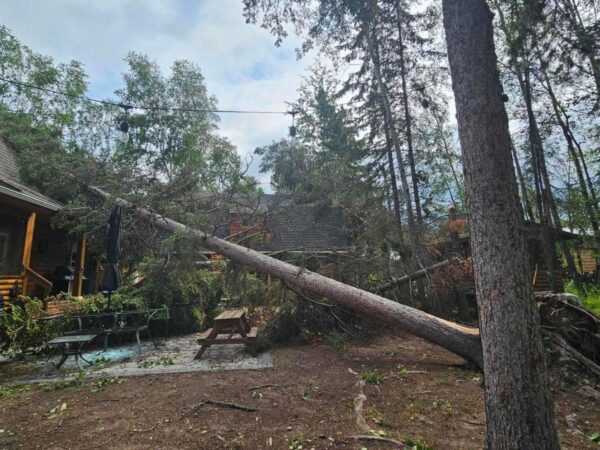
During the night of the anniversary celebration, powerful winds tore through the lake community where my parents live. By the time it was over, more than 100 trees had been pushed down across the area.
These were not little branches scattered across lawns. Many of the trees had trunks around 50-80 cm in diameter. Some crashed onto lake homes, sheds and other structures. My cousin’s property was hit especially hard, with four massive trees falling across the lake home and boat shed.
Suddenly, the next day’s plan was irrelevant.
There was damage to deal with, heavy trees to remove, branches and rubble everywhere, and a roof that needed attention. So our family did what families often do when something important needs to be done: we got to work.
No job descriptions. Just a shared outcome.
My siblings, extended family and many of the grandkids pitched in. We had four chainsaws going. Some people cut through the trunks. Others dragged branches, cleared debris, moved rubble, opened pathways and looked for the next useful thing to do. Once the trees were removed, family members even helped patch the damaged roof.
There were a lot of hands, a lot of sawdust and, somehow, a lot of smiles.
What struck me afterwards was how little discussion we needed about who was responsible for what. Nobody was protecting a title. Nobody was saying, ‘That isn’t really my area.’ The situation made the priority obvious, and people contributed according to what they could do.
Different strengths. Different tasks. One shared outcome.
That is also one of the clearest pictures I can think of for what healthy teamwork can look like inside an organisation.
Every corporate team eventually gets a ‘storm’
In corporate life, the storm is rarely a literal one. But every team eventually has a moment when the original plan no longer fits the reality in front of them.
It might be a major client deadline that suddenly moves forward. It might be a system outage. A product launch. A critical tender. A major event. An audit. An unexpected resignation or staff shortage. A customer issue that needs several departments to work together. Or a project that looked manageable on paper and then became much bigger than expected.
These moments test more than competence. They test culture.
Do people retreat into silos and defend the edges of their role? Or do they keep enough role clarity to avoid chaos while becoming flexible enough to support the shared outcome?
Strong teams don’t throw away roles. They know when the mission is bigger than the role.
1. Shared purpose makes decisions faster
When everyone can see the outcome that matters most, many smaller decisions become easier. At the lake, the priority was obvious: make the property safe, remove the fallen trees, clear the damage and protect the home from further harm.
Corporate teams need that same clarity. During pressure, leaders can help by naming the immediate shared outcome in plain language. What absolutely needs to be true by the end of today? What matters most to the client? What must be protected? What can wait?
A team with a clear shared outcome can make dozens of small decisions without needing every one of them escalated.
2. Great teams flex beyond role boundaries – without creating chaos
There is an important distinction here. High-performing teams still need clear roles, expertise and accountability. The answer is not for everybody to jump into everybody else’s work every day.
But exceptional moments require a different mindset. A person may temporarily step outside their normal lane because another part of the team is overloaded, because a deadline is at risk or because they have a capability that can help unblock the whole group.
The mindset shifts from, ‘Is this technically my responsibility?’ to, ‘What is the most useful contribution I can make right now?’
That flexibility is not role confusion. When it is grounded in a clear shared goal, it is collective ownership.
3. Different strengths become more valuable under pressure
Our family did not need everyone holding a chainsaw. In fact, that would have made the clean-up less effective. We needed people doing different things well: cutting, carrying, sorting, clearing, checking damage and repairing.
The same is true at work. When a big challenge arrives, the most useful team is not a group of identical people. It is a group that knows how to combine different capabilities.
One person may be calm with the client. Another may be technically brilliant. Someone else may organise the workflow, notice a safety risk, capture the details, keep communication moving or simply take a practical task off another person’s plate.
Great collaboration is not everybody doing the same thing. It is everybody understanding how their contribution connects to the same outcome.
4. Leadership becomes distributed
In moments like our storm clean-up, leadership naturally moves around. The person with the right experience for one task takes the lead for that moment. Someone else sees the next problem and starts organising around it. Another person quietly does the work that makes everyone else’s work possible.
Corporate teams are stronger when leadership is not treated only as a title. Managers still carry responsibility, but healthy teams create room for people to show initiative, speak up, solve problems and help coordinate action where they have the knowledge or capacity to do so.
That can make a team faster, more resilient and far less dependent on one person having every answer.
5. Culture is revealed when the original plan breaks
It is easy for a team to look collaborative when the workload is predictable and everyone has enough time. Pressure reveals something different.
It reveals whether people trust one another. Whether they communicate. Whether they keep score. Whether they wait to be told every next move. Whether leaders invite initiative. Whether people notice when a colleague is overloaded. Whether the team can keep a sense of perspective while still taking the situation seriously.
That is why team culture cannot be built only through slogans or values on a wall. It is built in hundreds of ordinary interactions before the difficult day arrives. The storm simply shows you what has already been growing.
A question worth asking your team
Think about the biggest piece of work your team needs to complete this quarter – or the kind of unexpected event that could put real pressure on your people.
If the plan changed tomorrow, what would happen?
Would people wait for instructions? Protect their patch? Focus only on what sits inside their position description? Or would they understand the shared goal, communicate quickly and ask, ‘Where can I help?’
That last question is powerful because it moves people from ownership of a task to ownership of the outcome.
Sometimes leadership looks like running the chainsaw. Sometimes it looks like dragging branches. Sometimes it looks like patching the roof after everyone else has cleared the way.
Different jobs. Same mission.
When the storm hits, what will your team do?
I certainly did not expect a violent storm and a tree-removal operation to become part of our family trip to Canada. But I will remember the picture for a long time: siblings, cousins, grandkids and extended family working side by side, doing whatever they could, with no concern about whether the task matched a title.
We had something important to complete, and we completed it together.
That is the kind of team culture organisations can intentionally build: clear enough for people to know their responsibilities, trusting enough for people to speak up, and flexible enough for people to rally when the mission demands more than business as usual.
Because some of the strongest teams are built – and revealed – in the moments when the original plan gets blown over.
About Breakthrough Corporate Training
At Breakthrough Corporate Training, we work with corporate teams and leaders to strengthen communication, leadership, team cohesion and the practical behaviours that help people work better together – especially when pressure, change or challenging situations test the team dynamic.
If your organisation wants to build a healthier, more cohesive and higher-performing team culture, this is exactly the kind of conversation worth bringing into the room.
#Teamwork #Leadership #TeamCulture #Collaboration #HighPerformingTeams #WorkplaceCulture #LeadershipDevelopment #EmployeeEngagement #CorporateTraining #BreakthroughCorporateTraining