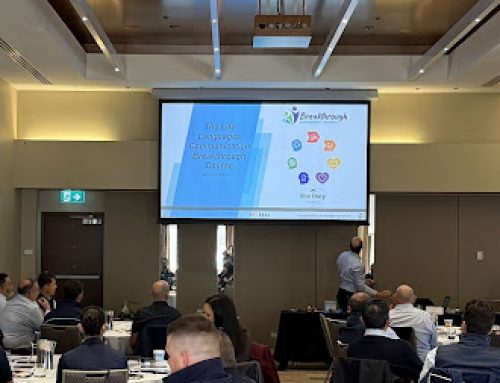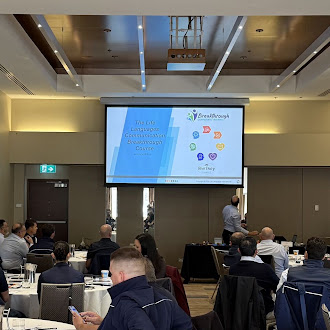

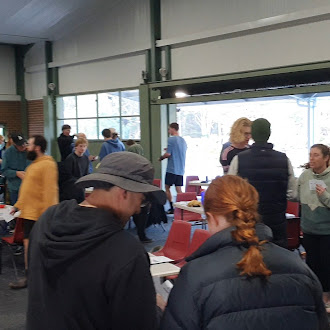
 I recently had the privilege of leading a Life Languages Communication team-building workshop at the Youthworks team retreat.
This was a really meaningful session for me, as I had the opportunity to work with around 80 Christian outdoor educators and camping professionals who serve across Youthworks’ conference centres and outdoor education environments.
The room was full of people with diverse backgrounds, roles, personalities, leadership styles and life experiences. Some were more reflective. Some were highly practical. Some were relational and expressive. Some were calm, structured, detailed, thoughtful or direct.
And that is exactly why communication matters so much.
When you bring together a team of people who all care deeply about the work they do, but who process information, ask questions, make decisions and respond under pressure in different ways, communication becomes more than just a workplace skill.
It becomes part of how trust is built.
It becomes part of how people feel valued.
It becomes part of how a team works together with clarity, care and unity.
Understanding the Lenses People Listen Through
One of the key ideas we explored during the workshop was that people do not just listen with their ears. They listen through lenses.
Every person has a different way of filtering information.
Some people listen for practical steps.
Some listen for emotional tone.
Some listen for meaning and purpose.
Some listen for risk, structure or clarity.
Some listen for whether people are being included, heard and considered.
This means that two people can hear the same sentence and walk away with two completely different interpretations.
One person might hear a direct question and think, “That was helpful and clear.”
Another person might hear the same question and think, “That felt sharp or critical.”
One person might hear a detailed explanation and feel reassured.
Another person might feel overwhelmed.
One person might be asking for action.
Another might be asking for understanding.
This is where communication can either build trust or create unnecessary misunderstanding.
The Question Behind the Question
After the session, Chris Deacon, Director of Conference Centres and Christian Outdoor Education, shared that the workshop was engaging and that one of the key take-homes was understanding the lenses people listen through.
He also reflected on the importance of recognising the kinds of filtering questions that sit underneath what people say.
I thought that was such a powerful insight.
Because often, the real conversation is not just the words being spoken.
There is usually a question behind the question.
Someone may ask, “Why are we doing it this way?”
But underneath that question, they may really be asking:
Do I understand the purpose?
Is there a clear plan?
Have the risks been considered?
Will this impact my team?
Is my perspective valued?
Can I trust this process?
Am I safe to be honest?
When we only respond to the surface-level question, we can miss the person behind it.
But when we learn to hear the question behind the question, we communicate with far more wisdom, empathy and discernment.
That is when conversations begin to shift.
Instead of reacting, we become curious.
Instead of assuming the worst, we listen more deeply.
Instead of defending our position, we seek to understand what the other person may actually need.
Why This Matters for Teams
For a team like Youthworks, this is incredibly important.
Christian outdoor educators and camping professionals work in environments where communication is constant. They are serving young people, schools, churches, families, leaders, teachers, guests and one another.
Their work involves safety, care, hospitality, leadership, teaching, logistics, problem-solving and teamwork.
In that kind of environment, communication has a direct impact on culture.
It affects how teams respond under pressure.
It affects how leaders give direction.
It affects how staff support one another.
It affects how conflict is handled.
It affects how people feel seen, heard and valued.
When teams understand one another’s communication styles, they are better equipped to work together with patience, clarity and grace.
They can reduce unnecessary friction.
They can ask better questions.
They can listen with more care.
They can navigate tension with greater maturity.
They can build a healthier and more cohesive team culture.
How Life Lang uages Helps Teams Communicate Better
The Life Languages Communication framework is one of the most practical tools I have used for helping teams understand how people are wired.
One of the things I appreciate about Life Languages is that it does not simply place people into one narrow personality box. Instead, it helps people understand that we all have all 7 Life Languages™ at varying levels of fluency.
These include:
Mover – direct, ambitious and assertive
Doer – dedicated, observant and practical
Influencer – optimistic, relational and expressive
Responder – compassionate, warm and passionate
Shaper – organised, focused and efficient
Producer – gracious, responsible and thoughtful
Contemplator – inquisitive, calm and reflective
Each Life Language has strengths. Each has preferred ways of communicating. Each has needs, filters, distress flares and potential blind spots.
When team members begin to understand this, they often start to see one another differently.
That person who asks lots of questions may not be trying to slow things down. They may be trying to understand deeply.
That person who wants action may not be trying to rush the process. They may be trying to create momentum.
That person who focuses on people’s feelings may not be avoiding the task. They may be protecting trust and connection.
That person who wants structure may not be trying to control everything. They may be trying to create clarity and stability.
When we understand the lens, we are less likely to misread the person.
A Workshop Full of Energy, Reflection and Insight
What I appreciated about the Youthworks team was their openness.
They brought energy, humour, honesty and thoughtfulness to the session. There was a genuine willingness to reflect, participate and think about how communication impacts their team culture.
The workshop included discussion, interaction, reflection and practical application, helping participants consider not only h
ow they communicate, but also how others may experience their communication.
That is such an important distinction.
Because good communication is not just about what I meant to say.
It is also about how the other person received it.
The more aware we become of that, the more effective we become as leaders, teammates and communicators.
Watch the Video Highlight from the Session
We have included a short video highlight from the Youthworks Life Languages Communication workshop in this article.
The video gives a glimpse into the energy of the session and includes reflections from Chris Deacon on what stood out for the Youthworks team.
I am grateful for the opportunity to have worked with Youthworks and to invest in a team that is doing such meaningful work through Christian outdoor education, camps and conference centre experiences.
Bring the Life Languages Communication Workshop to Your Team
If your team would benefit from improving communication, strengthening trust, reducing misunderstanding and learning how to better understand one another, the Life Languages Communication Breakthrough Course may be a great fit.
This training can be tailored for team retreats, leadership development days, staff conferences, professional development programs and organisation-wide team-building sessions.
At Breakthrough Corporate Training, we help teams build healthier communication, stronger relationships and more cohesive workplace cultures.
To learn more about the Life Languages Communication Breakthrough Course, visit:
https://www.breakthroughcorporatetraining.com.au/courses/life-languages-communication/
#LifeLanguages #CommunicationSkills #TeamBuilding #LeadershipDevelopment #ChristianLeadership #OutdoorEducation #TeamCulture #EmotionalIntelligence #WorkplaceCommunication #CorporateTrainingAustralia