

It’s Monday morning.
You’re at your desk early, coffee in hand, looking over the week ahead.
You’ve already mapped out the priorities.
You know the key deliverables.
You’ve explained the plan to the team over the last few weeks.
The structure is clear.
The strategy has been communicated.
The process has been outlined.
Now, in your mind, the team just needs to execute.
As a leader, you’re strong in the Shaper Life Language.
Your internal filter question is:
“Do you have a plan?”
And your communication need is:
Support and agreement for the plan, the process, the structure and the direction.
You’re also strong in the Mover Life Language, which means another filter question is running quietly in the background:
“What is your motive?”
You want to know that people are aligned, honest, focused and getting going while staying true to the standards that have been set.
So when team members come into your office on Monday morning, you’re not just hearing their words.
You’re filtering their communication through questions like:
“Are they across the plan?”
“Are they aligned with the process?”
“Are they moving in the right direction?”
“Are they clear on the priorities?”
“Why are they coming to me right now?”
“Are they helping us move forward?”
And then the morning begins.
The Contemplator Walks In
The first person to step into your office is someone on your team who is high in the Contemplator Life Language.
They’re thoughtful.
They’re analytical.
They’re considered.
They want to understand deeply before they act.
They begin talking through the task they’ve been working on.
They explain the background.
Then the possible risks.
Then the alternative pathways.
Then the assumptions.
Then what they’re still thinking through.
And as they’re speaking, you can tell they’ve done a lot of thinking.
The problem is, from your perspective, they’re not moving.
They’re analysing, reviewing, weighing up and refining — but the task is taking longer than expected. They’re spending time on the part of the work they’re most interested in, but not necessarily thinking ahead to the people who are waiting on their output.
In your mind, the question is simple:
“Where are we up to with the plan?”
But they’re not answering that question.
They’re answering a different one.
They’re trying to show that they’ve thought it through properly.
You’re listening, but internally you’re thinking:
“Can we please move from analysis to action?”
The Doer Walks In
Not long after, another team member comes in.
This person is high in the Doer Life Language.
They’re active.
They’re practical.
They like getting things done.
They are usually busy, productive and hands-on.
They start telling you about all the things they’ve already completed that morning.
They’ve replied to emails.
They’ve fixed a small issue.
They’ve helped someone with a request.
They’ve started clearing the easiest tasks sitting in front of them.
And, to be fair, they have been doing work.
But as you listen, you realise they’re not doing the highest-priority work.
They’re not connecting their activity to the bigger picture you’ve been explaining for weeks.
They are busy, but not necessarily strategic.
They are moving, but not necessarily in the direction the team needs most.
Again, your Shaper filter question is running:
“Do you have a plan?”
And your Mover filter question joins in:
“What is your motive?”
Not because you don’t trust them, but because you want to know:
“Are you doing what matters most?”
“Are you aligned with the direction?”
“Are you working the plan or just working what’s in front of you?”
But they’re not speaking through your filter.
They’re showing effort.
You’re looking for alignment.
The Influencer Walks In
Then comes the high Influencer Life Language.
They walk in with warmth, energy and connection.
Before getting to the work, they want to talk about the weekend.
They mention the World Cup match they watched.
They tell you who they saw, what happened, and how good the atmosphere was.
They are not trying to waste your time.
They are trying to connect.
For them, relationship often comes before direction. Connection creates energy. Rapport builds trust. Conversation is part of how they engage.
But on this particular Monday morning, you’re sitting there with the plan open in front of you.
You’re thinking about deadlines, priorities, accountability and momentum.
And while they’re talking about the weekend, your internal filter is asking:
“Are you clear on today’s plan?”
“Do you understand the process?”
“Are you aligned with what needs to happen next?”
They’re communicating connection.
You’re looking for clarity.
The Responder Walks In
Then another team member comes in.
This person is high in the Responder Life Language.
They’re emotionally aware.
They feel things deeply.
They notice the tone, the atmosphere and the human side of situations.
They begin by telling you about something that happened at home.
Someone was mean to their dog.
It really upset them.
It has affected their week.
They’re still carrying the emotion of it.
Again, they’re not trying to derail the day.
They’re bringing what is real for them into the room.
But you’re still sitting there with the Monday morning plan in front of you.
Your mind is already on the week’s structure, the priorities, the outcomes and the standards the team needs to meet.
And as they speak, your internal pressure rises.
Because no one has yet come into your office speaking your language.
No one has started with:
“I’m clear on the plan.”
“I’m aligned with the priorities.”
“Here’s where I’m up to.”
“Here’s what I need from you so I can move forward.”
“This is how I’m supporting the process.”
“This is the motive behind why I’m raising this.”
Instead, one person is analysing.
One person is doing low-priority tasks.
One person is connecting relationally.
One person is sharing an emotional experience.
And as a high Shaper and Mover leader, the temptation is to simply say:
“Can everyone just get on with it?”
This Is Where Communication Breaks Down
This is the moment where many leaders feel frustrated.
Not because their team is bad.
Not because people don’t care.
Not because anyone is deliberately trying to make things difficult.
But because everyone is communicating through their own filter.
The Contemplator is trying to be thorough.
The Doer is trying to be useful.
The Influencer is trying to connect.
The Responder is trying to be heard.
The Shaper leader is trying to protect the plan.
The Mover leader is trying to maintain momentum and standards.
Every person in that room has a communication style.
Every person has a filter question.
Every person has a need.
Every person has a passion.
Every person has character strengths that can add enormous value to the team.
But when those Life Languages are misunderstood, they can also collide.
The leader may see the Contemplator as overthinking.
The Contemplator may see the leader as impatient.
The leader may see the Doer as unfocused.
The Doer may feel unappreciated for getting things done.
The leader may see the Influencer as distracting.
The Influencer may feel dismissed or disconnected.
The leader may see the Responder as too emotional.
The Responder may feel unheard or uncared for.
And suddenly, what could have been a simple Monday morning becomes a communication bottleneck.
The Breakthrough Comes When We Learn the Filter
The power of the Life Languages Communication Breakthrough Course is that it helps leaders and teams understand what is really happening underneath the words being spoken.
Because communication is not just about what someone says.
It’s about how they filter what they hear.
It’s about what they need in order to feel understood.
It’s about what drives their passion.
It’s about how their character can be built up rather than shut down.
For a high Shaper, the filter question is:
“Do you have a plan?”
So if you are communicating with a Shaper, it helps to lead with structure, clarity, direction and alignment.
You might say:
“I understand the plan.”
“I’m aligned with the process.”
“Here’s where I’m up to against the priorities.”
“I need clarity on this part of the strategy so I can support it properly.”
For a high Mover, the filter question is:
“What is your motive?”
So it helps to be clear, direct, honest and purposeful.
You might say:
“The reason I’m raising this is…”
“My intention is to keep us moving.”
“I want to make sure we stay true to the standard we set.”
“I’m bringing this to you now because it affects the outcome.”
Those small shifts can change everything.
Because now the Shaper does not just hear noise — they hear alignment.
The Mover does not just hear interruption — they hear purpose.
The same is true across all 7 Life Languages.
When we learn to understand the pure form of each communication style, we can begin answering the other person’s filter question. When we answer the filter question, we are far more likely to meet their communication need. And when we meet that need, we can then drive their passion and build up their character.
That is when teams come alive.
The Goal Is Not for Everyone to Communicate the Same Way
The goal of Life Languages is not to make the Contemplator stop thinking.
Teams need deep thinkers.
The goal is not to make the Doer stop doing.
Teams need practical action-takers.
The goal is not to make the Influencer stop connecting.
Teams need energy, relationship and enthusiasm.
The goal is not to make the Responder stop feeling.
Teams need empathy, care and emotional awareness.
And the goal is not to make the Shaper or Mover leader soften the plan so much that standards disappear.
Teams need direction, structure, momentum and accountability.
The breakthrough happens when people learn how to communicate in a way that honours both their own Life Language and the Life Language of the person in front of them.
That is where understanding increases.
That is where trust grows.
That is where frustration reduces.
That is where collaboration becomes easier.
That is where performance improves.
Why This Matters for Leaders and Teams
In many workplaces, teams are not struggling because people lack skill.
They are struggling because people are constantly missing each other in communication.
A leader thinks they have been clear, but the team has not heard the message in the way they need to receive it.
A team member thinks they are being helpful, but the leader is looking for something completely different.
One person wants detail.
Another wants action.
Another wants connection.
Another wants empathy.
Another wants strategy.
Another wants purpose.
Without a shared language for communication, people often misread each other’s intentions.
They assume someone is being difficult when they are actually being thorough.
They assume someone is being careless when they are actually being practical.
They assume someone is wasting time when they are actually building connection.
They assume someone is being emotional when they are actually bringing awareness to what is affecting them.
The Life Languages framework gives teams a way to understand these differences and work with them, rather than against them.
A Communication Breakthrough Is a Culture Breakthrough
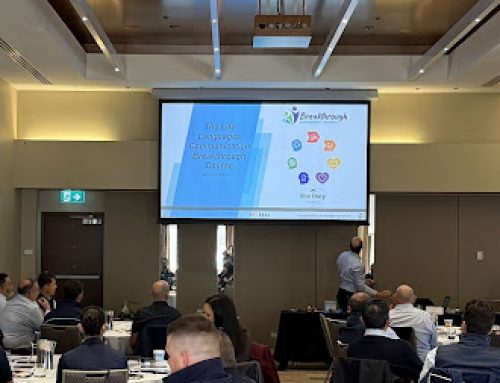
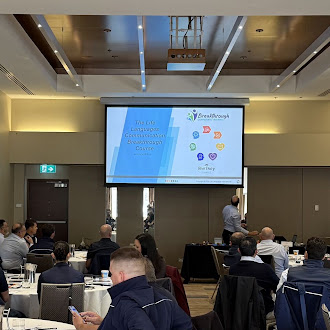
At Breakthrough Corporate Training, we run the Life Languages Communication Breakthrough Course to help leaders and teams communicate with greater clarity, empathy, alignment and impact.
This course helps teams understand:
How each person naturally communicates
How each person filters information
What each person needs in communication
What drives each person’s passion
How to build up each person’s character
How to reduce unnecessary communication breakdowns
How to create stronger team alignment
Because when teams understand each other, they stop wasting so much energy on miscommunication.
They become clearer.
They become more intentional.
They become more effective.
They become more connected.
And most importantly, they begin to communicate in ways that actually land.
So, What’s the Motive?
I’ll get to the motive of writing this article with a call to action for your leaders and teams.
And speaking of “Do you have a plan?” — do you have a plan for the next financial year to run a workshop or program that will increase your team culture and communication?
If communication, leadership alignment and team culture are priorities for your organisation, we’d love to have a conversation.
Check out our training video and success stories here:
Life Languages Communication Breakthrough Course
Because when your people understand how to communicate through each other’s filters, your team doesn’t just function better.
It comes alive.
#BreakthroughCorporateTraining #LifeLanguages #LeadershipDevelopment #CommunicationSkills #CorporateTraining #TeamCulture #ManagementTraining #LeadershipCommunication #HCF #teamtraining #teambuilding #teamcommunication